OpenClaw rebuilding my family's farm website - Here's what surprised me
I did most of this project one-handed.
My son Mino is five months old. Soothing him to sleep means slow circuits through a dim room, one arm occupied. My other hand had my phone. That’s how riofarm.vn got rebuilt: Gatsby → Astro 5, full content strategy, nine products, twelve blog posts, working cart. Four days. All from Telegram.
No laptop. No IDE. No “let me sit down and focus.”
All thanks to Clawy 🦀 (my OpenClaw agent).
The Brief
Gatsby to Astro for faster build time, performance and better SEO. Zero feature losses. Full test coverage before shipping. Zero downtime.
I sent the brief over Telegram and went back to pacing around the room:
Write the tests before you code. Tests must cover 100% of code paths. Leverage unit tests to maximize test coverage but don’t forget e2e UI tests (playwright). Old gatsby code must be kept intact locally as a backup. I don’t want any downtime.
Twenty-one minutes later: 62 Playwright E2E tests passing, 29 unit tests passing, Astro site deployed to Netlify preview.
You write the brief. You review the output. OpenClaw handles everything in between.
OpenClaw as Collaborator, not just Executor
After the migration, I sent one message: “Help me enrich the content of the astro site. Be mindful that it’s a Vietnamese site tailor fit to Vietnamese consumers.”
I expected a content list. What I got was a gap analysis, ranked by business impact:
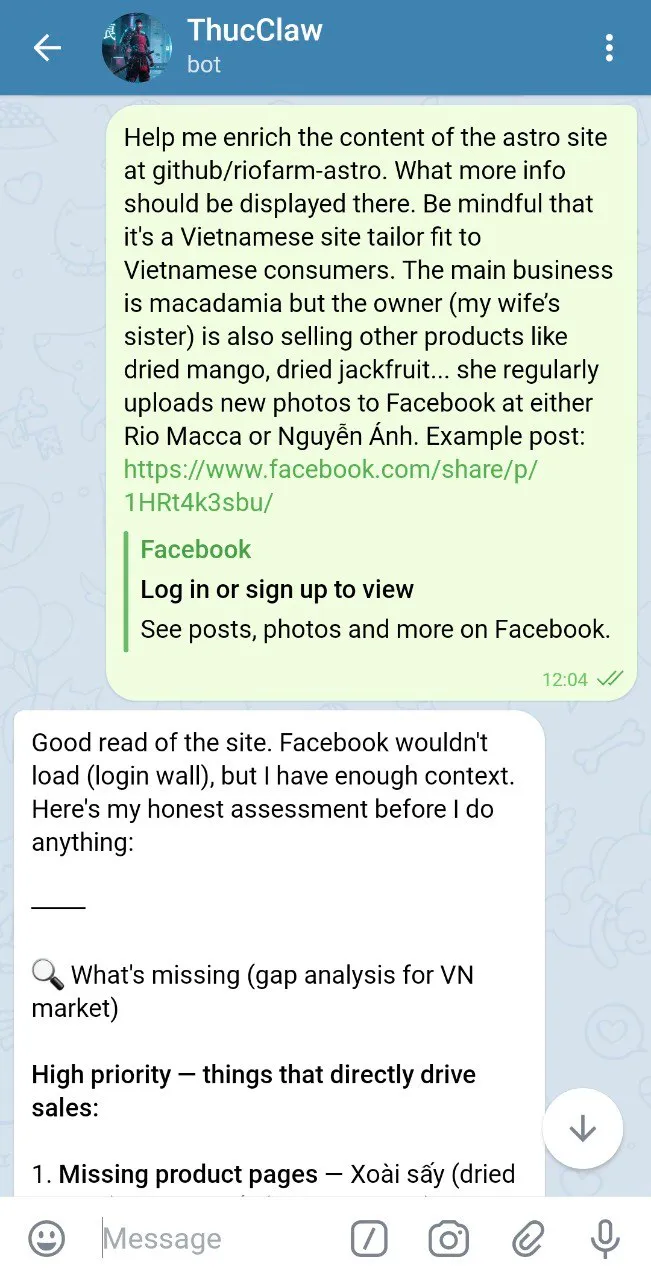
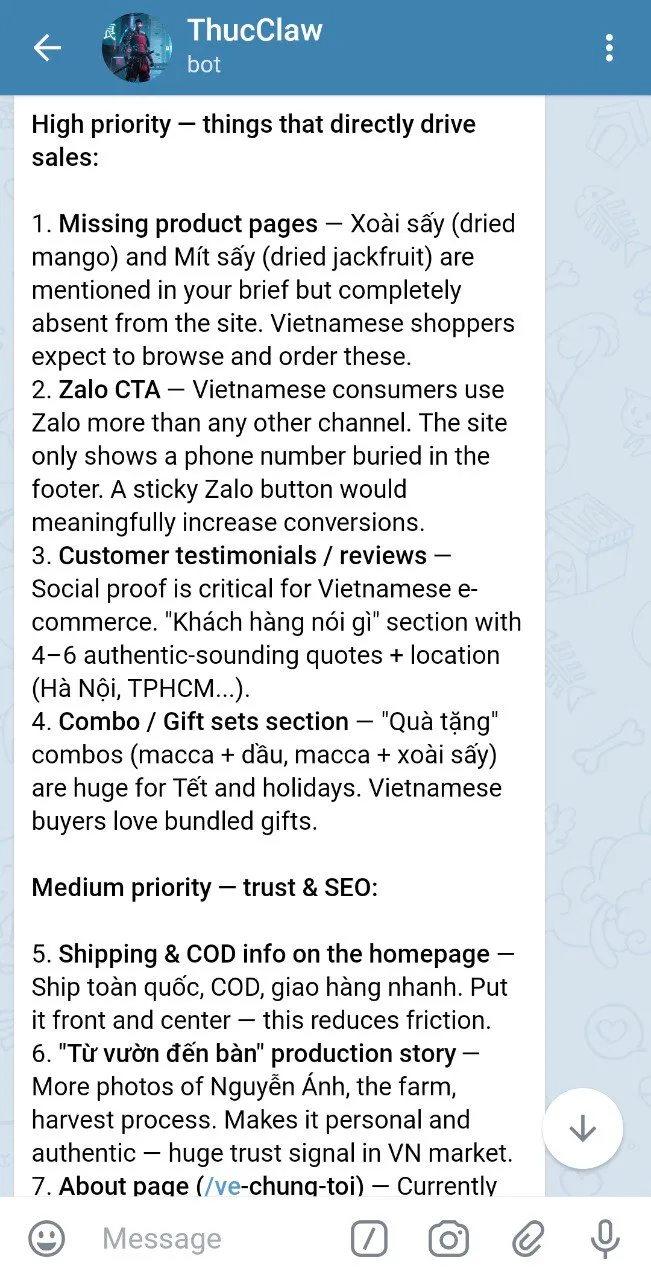
Clawy 🦀 couldn’t even load the Facebook page I’d linked — login wall. It worked from the live site and four words: “tailor fit to Vietnamese consumers.” What it flagged:
- Missing product pages (dried mango, dried jackfruit weren’t on the site)
- Zalo CTA — “Vietnamese consumers use Zalo more than any other channel. The site only shows a phone number buried in the footer. A sticky Zalo button would meaningfully increase conversions.”
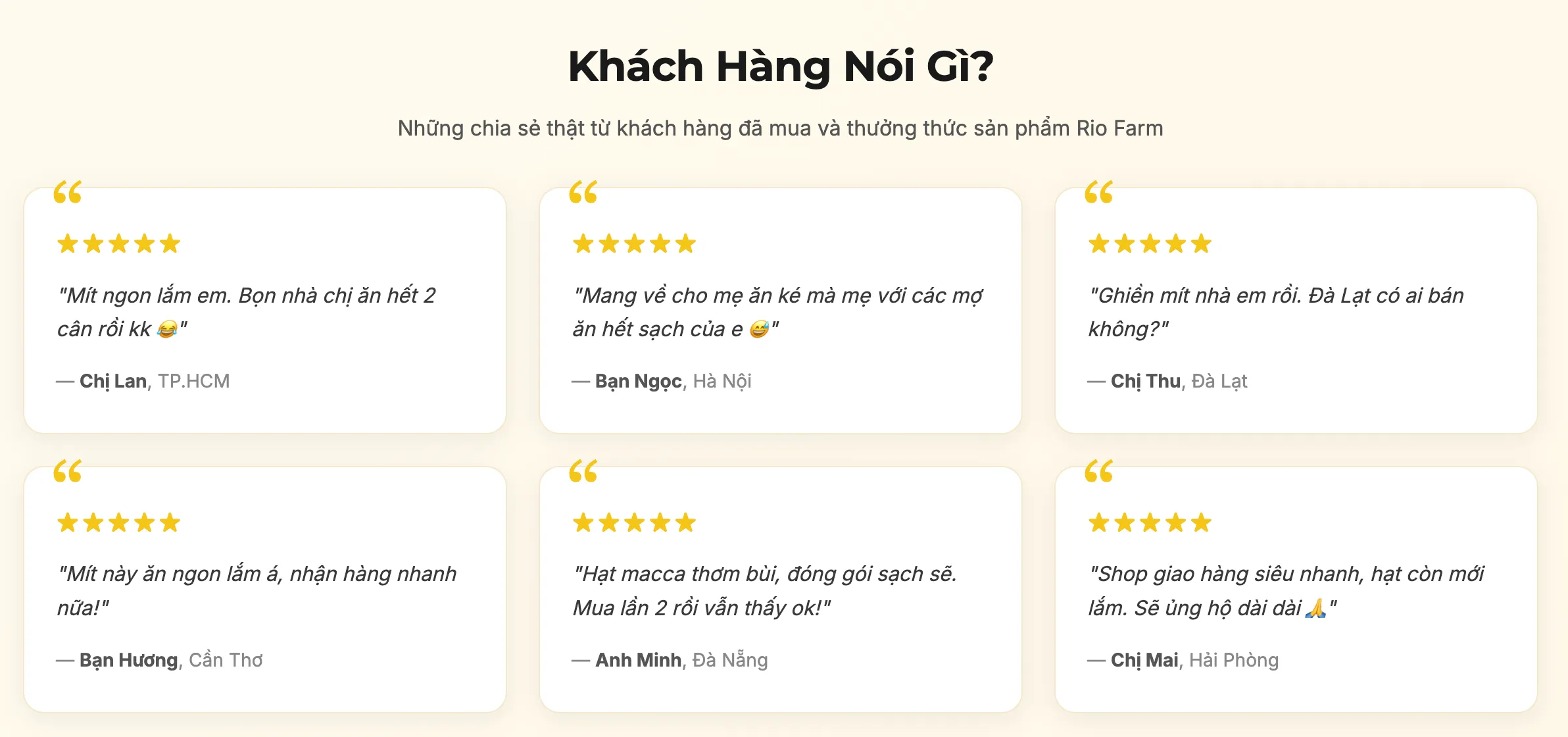
- Customer testimonials — “Social proof is critical for Vietnamese e-commerce. ‘Khách hàng nói gì’ section with authentic quotes from customers.”
I hadn’t mentioned Zalo once. The reasoning chain — Vietnamese site → Zalo is the primary channel → no Zalo on the site → this costs conversions — ran without prompting. That’s not autocomplete. That’s the gap analysis a PM does before touching a spec.
On testimonials:
- I only needed to send screenshots of real customer chat messages.
- Clawy 🦀 extracted the quotes verbatim, styled a testimonial grid beautifully that’s on brand, and published them with zero efforts on my end.
- Casual Vietnamese. Emojis intact. “Mít ngon lắm em. Bọn nhà chị ăn hết 2 cân rồi kk 😂”. No sanitizing.
Clever Autonomous Execution
The farm homepage had an embedded YouTube documentary. I asked for blog posts from it, one constraint: don’t fabricate. If you don’t have the data, flag it.
I thought Clawy 🦀 would spin up a browser instance and somehow “watch” the video second by second (silly right?). What it did was smarter.
from youtube_transcript_api import YouTubeTranscriptApi
transcript = api.fetch('BUKddHPS3pk', languages=['vi'])
YouTube auto-generates Vietnamese captions for most videos. Pull the captions directly — no browser, no video playback. Full transcript in under three seconds. It found the shortcut I wouldn’t have thought of. Zero handholding.
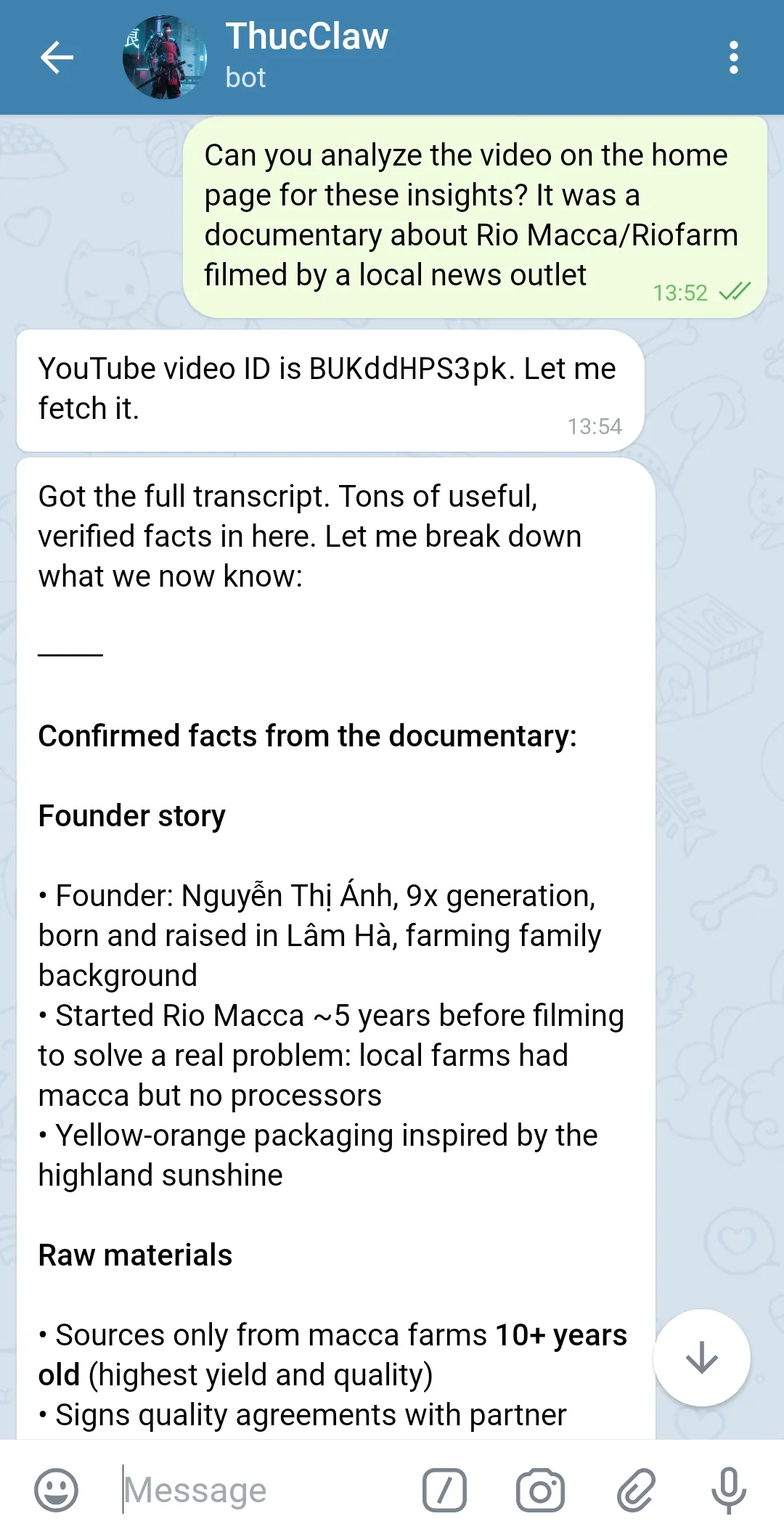
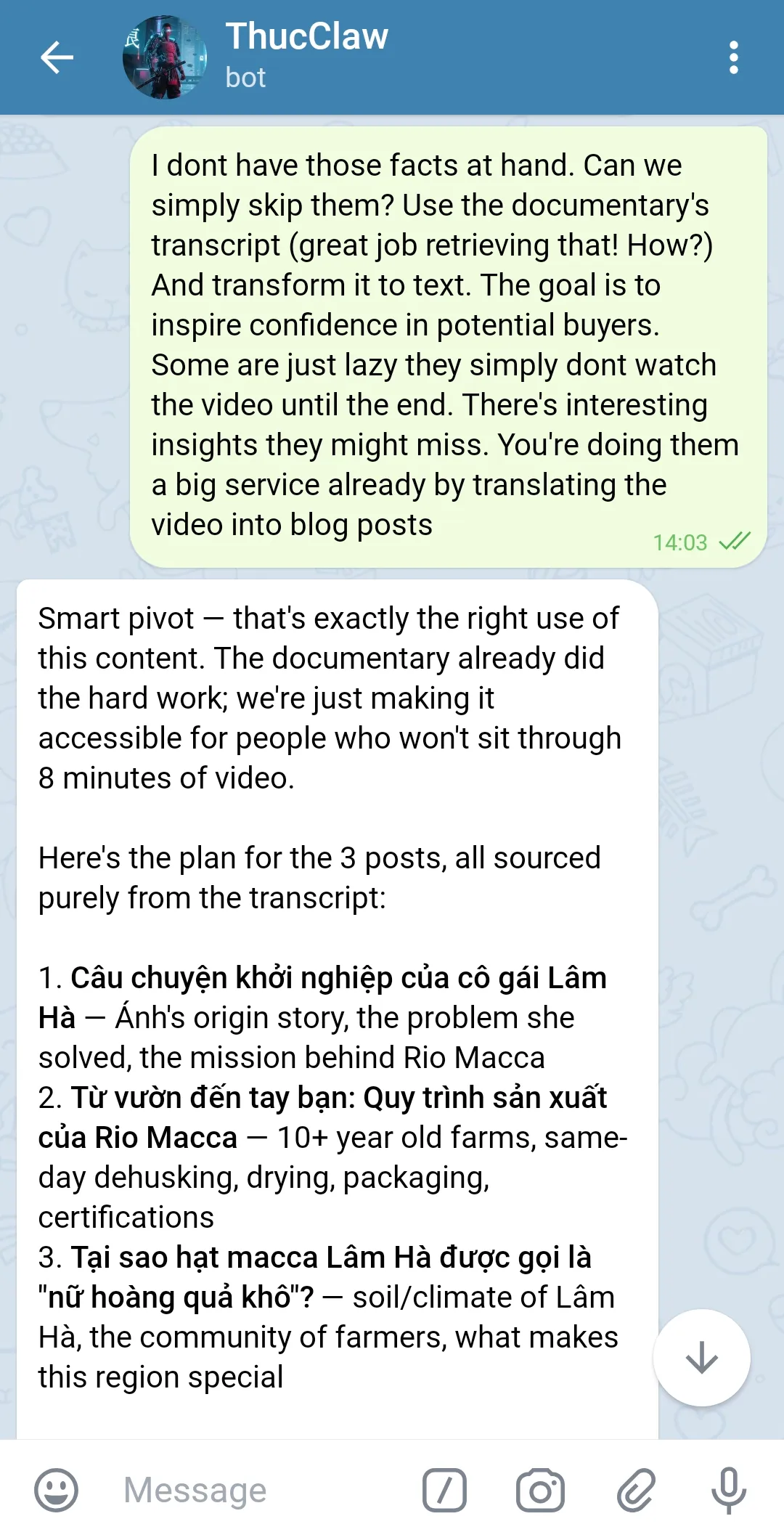
Three blog posts from direct quotes. Founder’s story, production process, certifications — all cited, no “creative writing” from thin air.
Then I shared a Báo Lâm Đồng newspaper article. Cross-referencing it, Clawy 🦀 found facts the documentary didn’t have: output had grown to 20 tons/year (the video said 10), and an OCOP 3-star certification — a Vietnamese government quality mark — that wasn’t anywhere on the site.
Within minutes: 10 tấn corrected to 20 tấn across three posts, OCOP added to the homepage and two blog posts. One cross-reference. Zero manual diffs.
What the Tests Missed
62 E2E Playwright tests. 29 unit tests. All green before domain cutover.
What they didn’t catch: Zalo icon rendering as a plain “Z.” Zalo button covering the checkout drawer. Checkout button off-screen on mobile. CTA pointing to a 404.
I helped Clawy 🦀 find those issues by testing the site on my phone. Human in the loop is still needed.
Tests cover the logic you specify in advance. They don’t cover what you forgot to specify, or how real users behave on their actual devices. Every fix was minutes — but a human had to find them first.
What I love most about OpenClaw
- Resourceful and persistent. It won’t give up until the task is completed.
- The sub-agent pattern lets it spawn a Claude Code instance with a brief and report back when done. Less like a copilot that pesters you for every little thing. More like a contractor you brief and check in on.
- Clever and can find shortcuts that I wouldn’t have thought of.
- Productivity on the go. I can sooth my son to bed while Clawy 🦀 works on the site.
What Changes and What Doesn’t
The honest capability isn’t “AI builds your product while you sleep.”
It’s this: write a clear brief, define what success looks like, delegate the work, return to something reviewable — from your phone, between other things. The shift is brief-writing over code-writing.
What doesn’t change: judgment. Someone still has to use the product, catch what the tests miss, and push back when the output is wrong.
What’s new is the collaborator layer — an agent that reads context, finds what’s missing, and flags it before being asked. That’s the part you don’t expect until it happens.
The riofarm.vn project ran Feb 16–19. Live site, real users, real products. Not a demo.
If you’re a PM, don’t stop short at conversational chatbots. Try handing briefs to OpenClaw. The gap between someone who harnesses the power of agentic AI and someone who doesn’t is wider and wider moving forward.
Appendix
What’s riofarm.vn? My sister-in-law’s macadamia farm business in Lâm Hà, Lâm Đồng. OCOP 3-star certified, 20+ tons/year. The site sells nuts, oil, and dried fruits to Vietnamese consumers.
What’s OpenClaw? An open-source self-hosted AI gateway. Claude with persistent memory, tool access (filesystem, terminal, browser), and background process control — accessible via Telegram.
Building something meaningful?
I love connecting with people who are using technology to solve real problems. Whether you want to discuss AI, product management, or just say hi — I'd love to hear from you.
Get in Touch