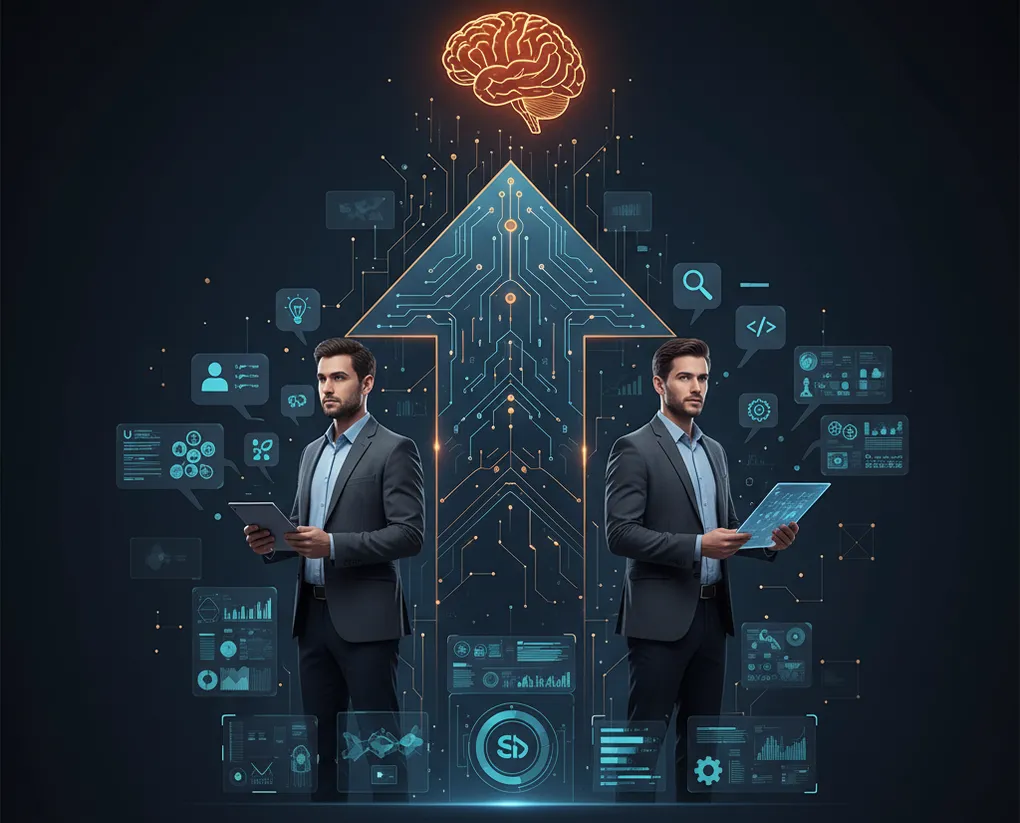
From Utility to Empathy - How the Product Craft Evolves in the Age of AI
Julie Zhuo wrote something recently that really stuck with me: The Thing You Are Expert at Will Be Your Career Downfall.
In it, she reminds us that mastery doesn’t vanish when technology evolves — it transforms. My favorite line was this:
When photography emerged in 1839, French academic painter Paul Delaroche reportedly declared, “From today, painting is dead!”
In one sense, Delaroche was right — what died was the careers of those painters who photocopied what they saw.
But in the broader sense, Delaroche was dead wrong. Photography unshackled painting from its utilitarian purpose.
That line hit me hard. It made me think about what this shift means for product managers like us. What utilitarian purpose of product management should we now let go — and, more importantly, how do we stay relevant in this new age?
The Utilitarian Side of Product Work
For years, our craft has been very hands-on: writing specs, triaging bugs, organizing backlogs, managing standups, ensuring cross-functional alignment. That’s where many of us found our pride and our flow — in the quiet art of connecting the dots.
All of this work was important. It kept the engine running. It was the utilitarian side of product management — the operational glue that allowed engineers, designers, and stakeholders to move in sync.
But let’s be honest: much of it is busywork disguised as craftsmanship. It’s about documentation, coordination, and process discipline — all of which are necessary, but not sacred.
This is the part of product management that AI should automate, and fast.
- Spec writing — AI can now turn customer tickets, usage data, or survey results into draft PRDs in seconds.
- Backlog triage — Instead of manually sorting issues, AI can cluster, deduplicate, and prioritize based on impact or effort.
- Meeting summaries and updates — Recaps, decision logs, and sprint notes can all be handled by generative tools.
- Data analysis — Once a slow dance with spreadsheets and SQL can now be performed through natural language prompts.
These are the portrait-painting parts of our craft — the ones that rely on precision, consistency, and discipline rather than creativity or judgment.
And just as photography freed painters from painting portraits for the rich, AI is freeing product managers from this layer of administrative labor. We’re being unshackled from our utilitarian past.
The Great Unshackling
When we hand over the utilitarian layer to AI, we’re not losing our identity — we’re reclaiming our purpose.
- We can spend less time maintaining Jira hygiene and more time understanding what keeps customers up at night.
- We can trade documentation loops for discovery loops.
- We can shift our energy from “keeping everyone in line” to inspiring everyone toward a shared vision.
That’s the great unshackling of our era. AI won’t replace product managers; it’ll remove the mechanical shell around the craft, leaving behind the part that’s most human — empathy, storytelling, and judgment.
Because product management has never really been about writing perfect specs. It’s about seeing people — users, teammates, and stakeholders — and helping them move toward a better future together.
Rediscovering the Human Side
If AI takes over the mechanical parts, what remains is the emotional, strategic, and moral dimension of our work — the kind that no algorithm can replicate.
Certain responsibilities still demand distinctly human judgment and taste:
- Defining the vision. Machines can remix ideas, but only humans can articulate why something matters — the “why now” and “why it matters” stories that move teams forward.
- Building roadmaps. AI can simulate options, but only humans can weigh trade-offs between ethics, ambition, and organizational reality.
- Talking to customers. At the end of the day, nobody wants to give feedback to a chatbot. They want to be heard by another human being who can empathize — someone who listens for the frustration behind their words and senses the emotion between the lines. No chatbot can replace genuine curiosity, empathy, and the subtle intuition you get from a live conversation — from noticing what a customer doesn’t say.
- Building trust and alignment. Leadership is emotional work. People follow people, not chatbots.
Empathy is what transforms a set of requirements into a real solution. It’s what allows us to see that a customer’s complaint about “too many clicks” is actually about feeling overwhelmed in their workflow.
These are the areas where product managers must double down. This is our artistry.
The Next Artistry
In many ways, this shift back to empathy is a return to our roots. The best product managers have always been mini-CEOs — not because they run everything, but because they care the most.
This isn’t about being “softer” PMs. It’s about being truer ones — expanding our empathy beyond data points to how humans actually experience technology in their lives.
Julie wrote:
“The engineer who hand-optimized code for elegance can now obsess over architecting systems of elegance; the writer who agonized over every word choice can now agonize over prompt engineering precision.”
So what about us?
Maybe the product manager who once obsessed over Jira tickets will now obsess over how technology and humanity learn from each other.
Maybe our new artistry lies not in managing backlogs, but in designing relationships — between humans, systems, and the values that connect them.
Because at its core, product management has never been about documents, metrics, or rituals. It’s about understanding people. And in this new era, that understanding will matter more than ever.
Our craft isn’t disappearing; it’s evolving.
We’re not just building products anymore — we’re building empathy into the systems that shape how people live, work, and dream. In other words, building software is easy, building software that really cares and understands is the name of the game now.
A Personal Example: When Empathy Meets Product Judgment
In my world of digital evidence management, empathy isn’t just a nice-to-have — it’s mission-critical.
Cops don’t watch video evidence for entertainment. They watch it to investigate crimes, to uncover truth, and ultimately to put the bad guys in jail faster. If we don’t truly understand these humans and their jobs, we’ll make grave mistakes by copying what works in consumer products like YouTube.
For example, imagine if we blindly borrowed YouTube’s playbook:
- Social features — comments, likes, shares. These engagement mechanisms have no place in a legal system. Evidence must be secure, isolated, and objective — not subject to popularity metrics or public opinion.
- Easy editing tools. YouTube provides creators with ways to trim, zoom, or add effects. A digital evidence management system (DEMS), on the other hand, must preserve the original file and maintain a complete audit trail of every interaction. Only non-destructive actions like annotations, redactions, or analysis on a secure copy are allowed.
- Trending or recommendation algorithms. In the consumer world, popularity drives discovery. In law enforcement, discovery must follow strict case IDs, metadata, and access permissions — not trending patterns or personal preferences.
If we fail to empathize with the reality of police work, we risk building features that look impressive in a demo but are utterly useless — or worse, dangerous — in practice.
On the other hand, when we start with empathy, we see opportunities that truly matter.
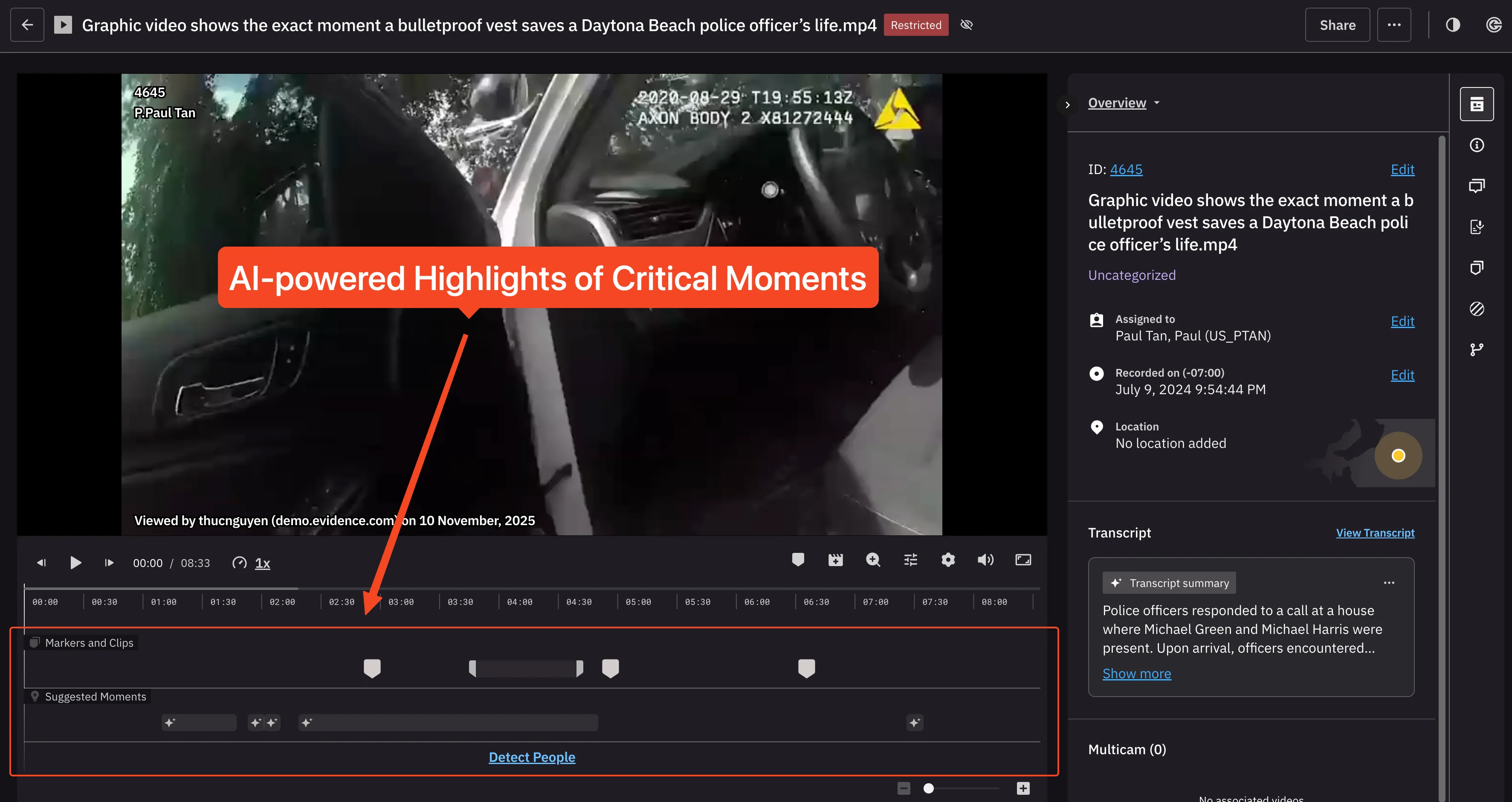
Cops don’t need “likes.” What they do need is help finding the critical few seconds in hours of footage — the moment a firearm was unholstered, a TASER discharged, or someone said, “I can’t breathe.”
That’s the kind of problem I’m working on — using AI to surface truth faster, while keeping the integrity of evidence intact. It’s not glamorous, but it’s deeply human work.
Because at the end of the day, empathy is what keeps us focused on solving real problems for real people.
Author’s Note
If this resonates with you, you’re probably someone who still believes that technology should make us more human, not less.
AI will keep getting better at execution — but empathy, curiosity, and judgment will always be ours to cultivate.
If you’re a fellow product manager exploring how AI is reshaping our craft, I’d love to hear your perspective. How do you see empathy evolving in your work?
You can reach me on LinkedIn or drop me a note at thucldnguyen.com. Let’s keep the conversation going.